
Executive Summary
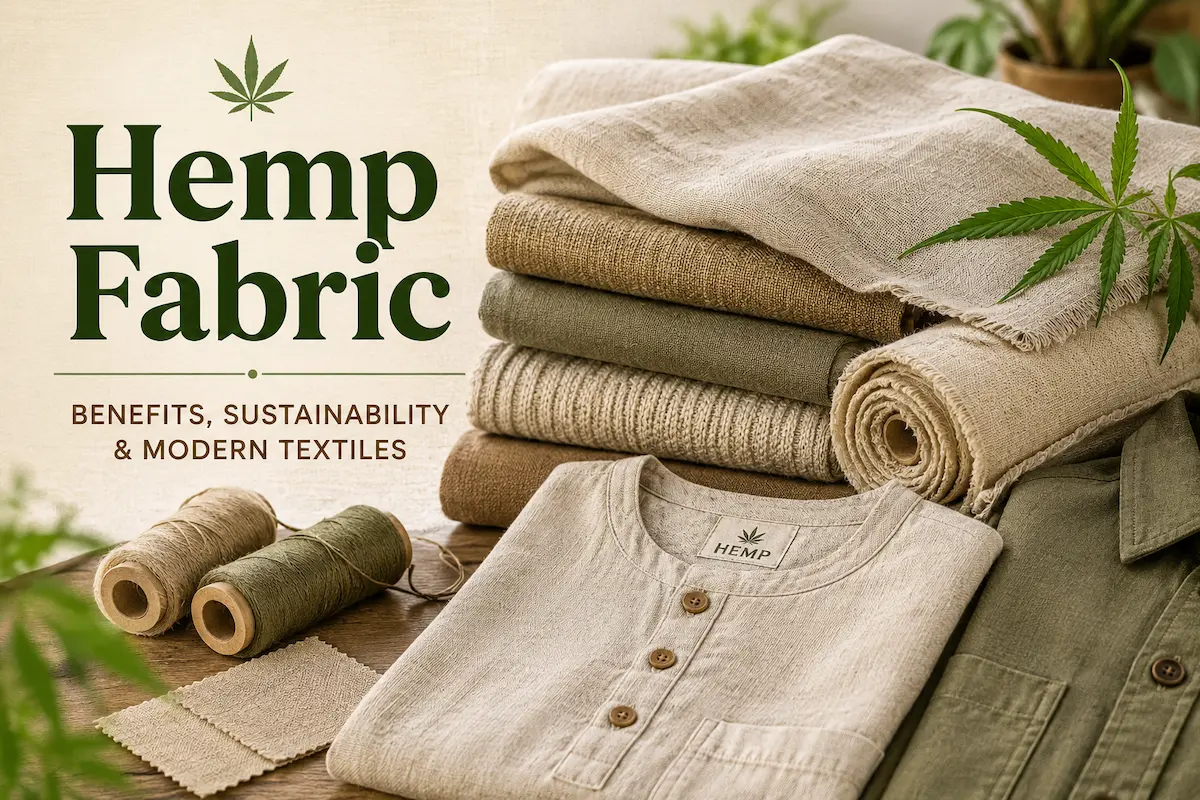
Hemp fabric has been used for centuries in products ranging from rope and sails to clothing and household textiles. Today, interest in hemp textiles is growing as consumers, manufacturers, and sustainability advocates explore alternative fiber sources for apparel and other textile products.
Industrial hemp fibers are known for their durability, breathability, and versatility. Modern textile innovations have also improved the softness and usability of hemp fabrics, helping expand their role in contemporary clothing and sustainable fashion markets. While hemp may offer environmental advantages under certain conditions, sustainability outcomes depend on farming practices, processing methods, transportation, manufacturing, and product life cycles.
This article explains how hemp fabric is produced, compares hemp with other common fibers, explores modern hemp blends, and examines the opportunities and challenges facing the future of hemp textiles.
Table of Contents
What Is Hemp Fabric?
Hemp fabric is a textile made from the bast fibers of industrial hemp stalks. It is commonly used in clothing, home textiles, and other fiber-based products because of its durability, breathability, and versatility.
Hemp fabric is made primarily from the bast fibers found in the stalk of industrial hemp plants. These long fibers are located beneath the outer bark of the stalk and have been valued for their strength and durability throughout history.
Industrial hemp grown for fiber production differs from cannabis cultivated for recreational or medical purposes. Fiber hemp varieties are selected for tall stalks, strong fiber production, and compliance with applicable hemp regulations.
Historically, hemp fibers were used in:
- Rope
- Sails
- Canvas
- Clothing
- Bags
- Household goods
- Agricultural products
Today, hemp fibers are increasingly used in apparel, footwear, home furnishings, technical textiles, and sustainable textile products.
For a broader overview of industrial hemp and its many applications, see our guide to Industrial Hemp: A Complete Guide:
https://hempjuana.com/industrial-hemp-guide/
Readers interested in global agricultural fiber production and crop systems can explore additional resources from the FAO:
https://www.fao.org/
How Hemp Fiber Is Made
The production of hemp fabric involves several processing stages that transform harvested hemp stalks into usable textile fibers.
1. Harvesting
Fiber hemp is harvested when plants reach maturity and optimal fiber quality.
2. Retting
Retting is a process that helps separate fibers from the woody core of the hemp stalk. This may occur through field retting, water retting, or modern controlled methods.
3. Decortication
Decortication mechanically separates the bast fibers from the inner woody core, often called hurd or shive.
4. Fiber Separation
The fibers are cleaned, refined, and prepared for textile production.
5. Spinning
Refined fibers are spun into yarns suitable for textile manufacturing.
6. Weaving or Knitting
The yarn is then woven or knitted into finished fabrics for clothing and other textile applications.
Readers interested in the historical development of hemp processing infrastructure can explore:
Hemp Processing History: Rise and Fall of U.S. Mills
https://hempjuana.com/hemp-processing-history-america/
Benefits of Hemp Fabric
Durability
One of hemp fabric’s most recognized characteristics is its strength. Hemp fibers are naturally durable and can withstand repeated use over time.
Breathability
Hemp fabrics are generally breathable, making them suitable for a variety of clothing applications and climates.
Moisture Management
Hemp textiles can help manage moisture by allowing air circulation and supporting wearer comfort.
Softening Over Time
While some hemp fabrics may initially feel firm, many become softer after repeated washing and use.
Versatility
Hemp can be used in:
- Shirts
- Pants
- Jackets
- Shoes
- Upholstery
- Bedding
- Bags
- Technical textiles
Biodegradability
Under appropriate conditions, hemp fibers are biodegradable, making them a potential option for products designed with end-of-life considerations in mind.
Additional research on agricultural fibers, plant materials, and fiber innovation is available through the USDA Agricultural Research Service:
https://www.ars.usda.gov/
Is Hemp Fabric Sustainable?
Hemp fabric may offer environmental advantages depending on farming practices, processing methods, transportation, and manufacturing systems. Sustainability outcomes vary by production system and cannot be generalized across all products.
Sustainability is one of the most frequently discussed aspects of hemp textiles, but the topic requires careful context.
Hemp may offer environmental advantages depending on growing conditions, agricultural practices, processing methods, transportation requirements, and product manufacturing systems.
Potential sustainability considerations include:
- Participation in crop rotation systems
- Soil-management benefits
- Potential reductions in certain agricultural inputs
- Renewable annual crop production
- Biodegradable fiber options
- Carbon capture during plant growth
However, sustainability outcomes vary significantly between regions, farms, and manufacturing systems.
Claims that hemp is always more sustainable than other textile fibers are not supported in every situation.
For additional information about hemp’s agricultural role, see:
How Hemp Improves Soil Health and Supports Sustainable Farming
https://hempjuana.com/how-hemp-improves-soil-health-and-supports-sustainable-farming/
Readers interested in agricultural economics, resource management, and sustainability research can explore publications from the USDA Economic Research Service:
https://www.ers.usda.gov/
Hemp vs Cotton
| Feature | Hemp | Cotton |
|---|---|---|
| Source | Bast fiber crop | Seed fiber crop |
| Durability | Generally strong and durable | Varies by variety and quality |
| Breathability | High | High |
| Softness | Often improves with use | Typically soft initially |
| Agricultural Inputs | Varies by production system | Varies by production system |
| Biodegradable | Yes, under appropriate conditions | Yes, under appropriate conditions |
| Processing Infrastructure | More limited | Highly developed globally |
Both hemp and cotton have advantages and limitations. Environmental performance depends heavily on how each crop is grown and processed.
Hemp vs Linen
| Feature | Hemp | Linen |
|---|---|---|
| Source Plant | Industrial hemp | Flax |
| Durability | High | High |
| Breathability | High | High |
| Texture | Can range from firm to soft | Often crisp and lightweight |
| Wrinkle Resistance | Moderate | Moderate |
| Market Availability | More limited | Established niche market |
| Sustainability Factors | Vary by system | Vary by system |
Because hemp and linen are both bast fibers, they share many performance characteristics.
Modern Hemp Blends
Many consumers assume hemp clothing is made entirely from hemp fiber. In reality, many modern hemp textile products use blended fibers.
Why Blends Exist
Manufacturers often blend hemp with other fibers to improve softness, stretch, manufacturing efficiency, cost management, and overall fabric performance.
Common Hemp Blends
- Hemp and cotton
- Hemp and organic cotton
- Hemp and recycled polyester
- Hemp and Tencel™
- Hemp and bamboo-derived fibers
- Hemp and elastane
Softness
Blending hemp with softer fibers can create fabrics that feel more familiar to consumers while retaining some hemp characteristics.
Durability
Blends may balance durability with comfort and flexibility.
Manufacturing Advantages
Cottonized hemp fibers can be processed using equipment already designed for cotton manufacturing, potentially helping expand hemp adoption within existing textile supply chains.
Organizations such as Textile Exchange continue to track developments in sustainable textiles, material innovation, and fiber supply chains:
https://textileexchange.org/
Common Consumer Concerns
Is Hemp Fabric Scratchy?
Modern hemp fabrics are often much softer than historical hemp textiles. Fabric feel depends on processing methods, fiber quality, and whether the material is blended.
Does Hemp Shrink?
Like many natural fibers, hemp may shrink if exposed to excessive heat during washing or drying.
Does Hemp Wrinkle?
Hemp fabrics can wrinkle more easily than some synthetic or blended materials.
Is Hemp Expensive?
Hemp products often cost more than comparable conventional textiles because hemp processing infrastructure remains relatively limited in many regions.
Does Hemp Stretch?
Pure hemp fabric generally has limited natural stretch. Blended fabrics may provide additional flexibility.
How to Care for Hemp Clothing
Washing
- Follow manufacturer instructions.
- Use mild detergents when appropriate.
- Avoid excessive washing temperatures.
Drying
- Air drying may help reduce shrinkage.
- Avoid excessive heat when possible.
Storage
- Store in clean, dry environments.
- Avoid prolonged exposure to moisture.
Long-Term Care
- Repair minor damage when practical.
- Follow garment-specific care recommendations.
The Future of Hemp Textiles
Cottonized Hemp
Cottonized hemp processing may allow hemp fibers to integrate more easily into existing textile manufacturing systems.
Industry organizations such as the European Industrial Hemp Association (EIHA) continue to monitor developments in hemp fiber production, processing, and textile markets:
https://eiha.org/
Textile Innovation
Researchers and manufacturers continue exploring improved processing techniques, fiber refinement methods, and new textile applications.
Sustainability Trends
Growing interest in renewable materials and circular economy concepts may support continued exploration of hemp-based textiles.
Market Development
Although hemp remains a relatively small segment of the global textile market, expanding infrastructure and consumer awareness could influence future growth.
Frequently Asked Questions
What is hemp fabric made from?
Hemp fabric is primarily made from bast fibers extracted from the stalk of industrial hemp plants.
Is hemp fabric durable?
Hemp textiles are widely recognized for strength and durability.
Does hemp fabric soften over time?
Many hemp fabrics become softer through repeated washing and regular use.
Is hemp fabric biodegradable?
Under appropriate environmental conditions, hemp fibers are biodegradable.
Why do hemp clothes cost more?
Limited processing infrastructure and smaller production scales can contribute to higher costs.
Are most hemp clothes 100% hemp?
No. Many modern hemp products use fiber blends that combine hemp with cotton, recycled fibers, Tencel™, or other materials.
Is hemp fabric good for hot weather?
Hemp fabric is generally considered breathable and moisture-managing, which can make it comfortable in warm conditions.
How long does hemp clothing last?
Longevity depends on garment construction, usage, and care, but hemp fibers are widely recognized for durability and long-term wear resistance.
Conclusion
Hemp fabric represents one of the oldest textile materials in human history while also serving as an area of ongoing innovation. Its strength, durability, breathability, and versatility continue to attract interest from manufacturers and consumers alike.
While hemp may offer environmental advantages in certain situations, sustainability outcomes depend on the entire production system rather than a single fiber source. As processing technologies improve and textile infrastructure expands, hemp may continue to play a growing role within modern textile markets.
Editorial Note
This article is provided for informational and educational purposes only. It is based on publicly available agricultural, textile, industry, and regulatory sources available at the time of publication. It should not be considered legal, financial, agricultural, environmental, or professional advice. Readers should conduct their own research and consult qualified professionals when making decisions related to hemp, textiles, sustainability, manufacturing, or business activities.