
Cannabis and Human Health: Executive Summary
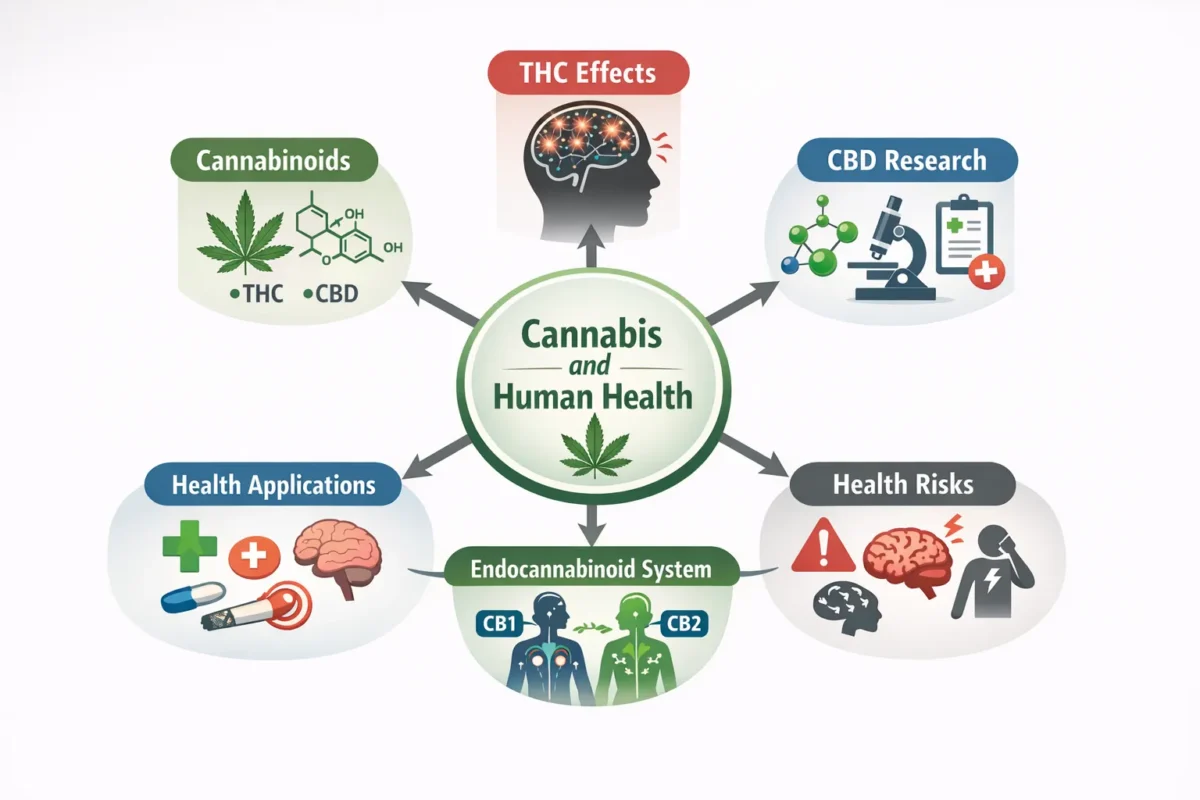
Research on cannabis and human health focuses on how compounds in the cannabis plant interact with the body’s endocannabinoid system, a biological network involved in regulating functions such as mood, appetite, and pain perception. Studies examine the effects of cannabinoids including tetrahydrocannabinol (THC) and cannabidiol (CBD), potential medical applications such as seizure treatment and chronic pain research, and documented risks including cognitive impairment and dependency. Scientific and regulatory institutions—including the National Institutes of Health, National Institute on Drug Abuse, U.S. Food and Drug Administration, and the World Health Organization—continue to study both the benefits and potential harms associated with cannabis exposure.cannabis and human health research continues to be examined across multiple scientific and regulatory fields.
Verified Legal / Regulatory Foundation
Federal Drug Classification
Under the Controlled Substances Act, cannabis has historically been listed as a Schedule I controlled substance, a category used for substances considered to have high potential for abuse and no accepted medical use under federal law at the time of classification. The statute establishes regulatory control but does not independently determine medical efficacy.
Agricultural Definition of Hemp
The Agriculture Improvement Act of 2018 defines hemp as cannabis containing no more than 0.3% delta-9 tetrahydrocannabinol (THC) on a dry-weight basis. This legal definition applies to agricultural regulation and production but does not establish medical claims or therapeutic approval.
FDA-Approved Cannabinoid Medication
The U.S. Food and Drug Administration approved the prescription drug Epidiolex, a purified cannabidiol formulation, for certain rare seizure disorders. The approval followed clinical trials evaluating its safety and effectiveness.
Confirmed Facts
• Cannabis plants produce biologically active compounds known as cannabinoids.
• Cannabinoids interact with biological signaling systems in the human body.
• The human body contains an endocannabinoid system, which participates in regulating processes including mood, appetite, and pain perception.
• The cannabinoid THC (tetrahydrocannabinol) produces psychoactive effects primarily through activation of CB1 receptors in the brain and central nervous system.
• CBD (cannabidiol) does not produce intoxicating effects and has been studied for potential therapeutic applications including seizure disorders and inflammatory processes.
• A purified cannabidiol medication, Epidiolex, has received regulatory approval for treatment of certain rare forms of epilepsy.
• Scientific studies frequently examine cannabis in the context of chronic pain research, among other medical conditions.
• Reported adverse effects of cannabis use may include cognitive impairment, anxiety, and potential dependency in some individuals.
• Long-term effects of cannabis exposure on the developing brain remain an active area of scientific investigation.
Clarifications / Misinterpretations
Cannabis vs. Cannabinoids
Cannabis refers to the plant species, while cannabinoids are the chemical compounds produced by the plant. Research often focuses on individual cannabinoids rather than the plant as a whole.
Psychoactive vs. Non-Intoxicating Compounds
Not all cannabinoids produce psychoactive effects. THC is the primary compound associated with intoxication, whereas CBD does not cause the same cognitive effects.
Medical Approval vs. Research Interest
Many studies examine cannabinoids for possible therapeutic roles, but scientific investigation does not necessarily indicate approved medical treatment. Regulatory approval requires controlled clinical trials demonstrating safety and effectiveness.
Structural Implications
Scientific research into cannabis and human health primarily centers on understanding how cannabinoids interact with the endocannabinoid system, a regulatory network involved in multiple physiological functions. This interaction has made cannabinoids a subject of investigation in fields including neurology, pain research, and immunology. At the same time, public health research examines potential risks associated with cannabis exposure, particularly concerning cognitive effects and developing brains. The coexistence of therapeutic investigation and risk assessment reflects the current structure of cannabis-related health research across medical and regulatory institutions.
Cannabis and Human Health: Conclusion
Scientific study of cannabis and human health focuses on the biological activity of cannabinoids and their interaction with the human endocannabinoid system. Research conducted by medical and public health organizations has documented both areas of therapeutic investigation—such as seizure disorders and chronic pain—as well as potential risks including cognitive impairment and dependency. As research continues, the understanding of cannabinoids, their physiological mechanisms, and their health implications remains an evolving field within biomedical science.
Version: v1.0
Based on verified statutory and regulatory sources current as of March 2026.