
EXECUTIVE SUMMARY
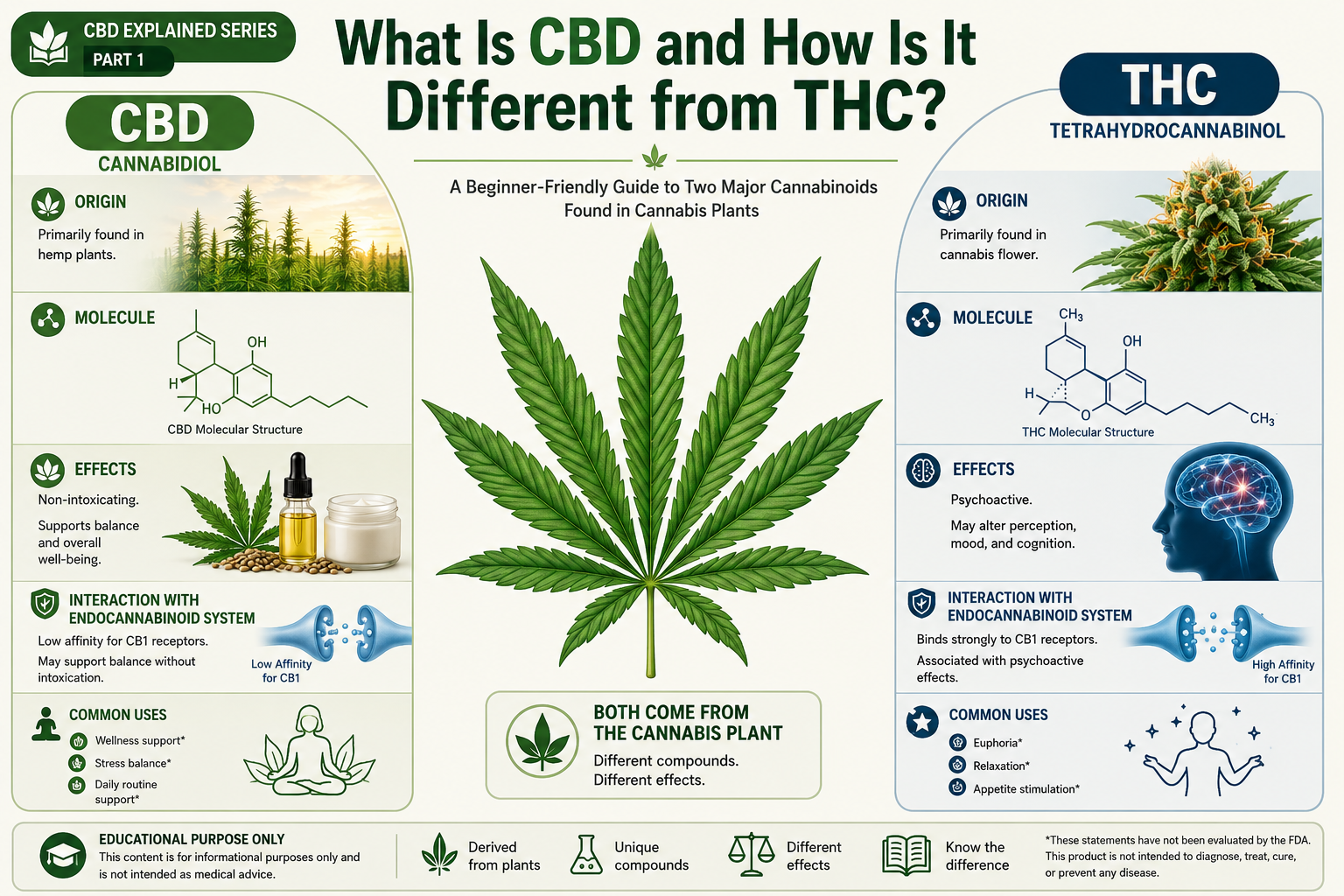
What Is CBD and How Is It Different from THC? CBD and THC are two of the most widely recognized cannabinoids found in cannabis plants. While they share a common origin, they interact with the body differently and are associated with different effects. CBD is generally considered non-intoxicating, while THC is responsible for the psychoactive effects commonly associated with marijuana.
This updated article is part of HempJuana’s CBD Explained Series and serves as a beginner-friendly introduction to cannabinoids, hemp, marijuana, and the legal considerations surrounding CBD products.
Table of Contents
What Is CBD?
CBD, short for cannabidiol, is a naturally occurring cannabinoid found in cannabis plants. It is one of many compounds produced by the plant and has become one of the most widely recognized cannabinoids in consumer products.
Unlike THC, CBD is generally considered non-intoxicating. It does not produce the traditional euphoric effects most people associate with marijuana.
Researchers continue studying CBD and its interactions with biological systems throughout the body. However, scientific understanding continues to evolve, and evidence varies depending on the specific application being studied.
For additional information:
- NCCIH Cannabis and Cannabinoids Overview.
- FDA Regulation of Cannabis and Cannabis-Derived Products, Including Cannabidiol (CBD)
For the next step in the CBD Explained Series, read:
What Is THC?
THC, or tetrahydrocannabinol, is another cannabinoid found in cannabis plants.
Unlike CBD, THC is considered intoxicating and is primarily responsible for the psychoactive effects commonly associated with marijuana use.
These effects may include:
- Euphoria
- Altered perception
- Impaired coordination
- Impaired judgment
- Slower reaction times
Because THC can affect cognition and motor function, it is regulated differently than CBD in many jurisdictions.
What Is CBD and How Is It Different from THC?
Although CBD and THC originate from the same plant family, they differ in several important ways.
CBD
- Generally non-intoxicating
- Commonly found in hemp-derived products
- Does not produce the traditional marijuana high
THC
- Intoxicating
- Produces psychoactive effects
- May impair coordination and judgment
Both compounds belong to a larger class of naturally occurring plant compounds known as cannabinoids.
What Are Cannabinoids?
Cannabinoids are naturally occurring compounds found in cannabis plants.
Scientists have identified dozens of cannabinoids, with CBD and THC among the most recognized and widely studied.
These compounds interact with biological systems throughout the body, which is one reason researchers continue investigating their potential roles and mechanisms.
Want to continue learning?
Future reading:
- What Are Cannabinoids?
- Understanding the Endocannabinoid System
- CBD vs CBG vs CBN
Hemp vs Marijuana Explained
One of the most common misconceptions is that hemp and marijuana are entirely different plants.
In reality, both belong to the cannabis family.
Under United States federal law, hemp and marijuana are primarily distinguished by THC concentration. This legal distinction influences:
- Cultivation
- Regulation
- Manufacturing
- Consumer sales
Under United States federal law, hemp and marijuana are primarily distinguished by THC concentration. This legal distinction influences:
- Cultivation
- Regulation
- Manufacturing
- Consumer sales
For additional information about federal hemp production requirements and oversight:
USDA Domestic Hemp Production Program
Does CBD Get You High?
This is one of the most frequently asked questions among beginners.
CBD is generally considered non-intoxicating and does not produce the euphoric effects associated with THC.
However, some CBD products may contain trace amounts of THC depending on:
- Formulation
- Extraction methods
- Manufacturing practices
Consumers should always review product information and available third-party laboratory testing before purchasing.
Is CBD Legal?
CBD legality is more complicated than many headlines suggest.
The 2018 Farm Bill established a federal framework for hemp production, but legality may still depend on factors such as:
- Product type
- THC concentration
- Federal regulations
- State laws
Because regulations continue to evolve, consumers should review current laws applicable to their jurisdiction.
Helpful resources:
- FDA Cannabis and CBD Information
- USDA Domestic Hemp Production Program
For a deeper discussion, continue to:
Common Beginner Misconceptions
Misconception #1: CBD Gets You High
CBD is generally non-intoxicating and does not create the traditional marijuana high associated with THC.
Misconception #2: Hemp and Marijuana Are Completely Different Plants
Both belong to the cannabis family and are primarily distinguished under federal law by THC concentration.
Misconception #3: CBD Is Legal Everywhere
CBD legality varies based on state laws, product formulation, and regulatory requirements.
Misconception #4: All CBD Products Are FDA Approved
Most consumer CBD products currently available on the marketplace are not FDA-approved.
Current regulatory information:
- FDA Cannabis and CBD Information
Consumer Safety Considerations
Not all CBD products are manufactured, tested, or labeled equally.
Consumers should understand that some products may contain:
- THC
- Contaminants
- Inaccurate labeling
- Unexpected ingredients
Before purchasing CBD products, consider reviewing:
- Ingredient information
- Third-party laboratory testing when available
- Manufacturer transparency
Additional consumer information:
- CDC Information About CBD
Continue Learning
Continue through the CBD Explained Series:
- CBD 101 Basics Guide
- How CBD Interacts With the Body
- Types of CBD Products
- How CBD Is Made From Plant to Product
- The Legal Side of CBD
Future Resources:
- What Are Cannabinoids?
- Does CBD Get You High?
- Hemp vs Marijuana Explained
- Full Spectrum vs Broad Spectrum CBD
- CBD vs CBG vs CBN
- How THC Works in the Body
- Understanding the Endocannabinoid System
Conclusion
CBD and THC are both cannabinoids derived from cannabis plants, but they are not the same. CBD is generally considered non-intoxicating, while THC is associated with the psychoactive effects commonly linked to marijuana.
Understanding the differences between these compounds can help consumers make more informed decisions and better understand the broader cannabis and hemp landscape.
Researchers continue studying cannabinoids, and regulatory frameworks continue to evolve. Staying informed through reputable sources remains an important part of navigating this rapidly developing field.
Article Revision Notice
This article is a revised and updated version of an earlier HempJuana publication. The content has been reviewed and modernized using current educational, regulatory, and consumer information available at the time of publication to improve accuracy, clarity, and alignment with the CBD Explained Series.
Version: v2.0
Based on verified statutory and regulatory sources current as of May 2026.
Editorial Note: This article is provided for informational and educational purposes only. It is based on publicly available sources and should not be considered legal, medical, or professional advice. Readers should conduct their own research and consult qualified professionals when making decisions related to cannabis, hemp, CBD products, or applicable laws and regulations.